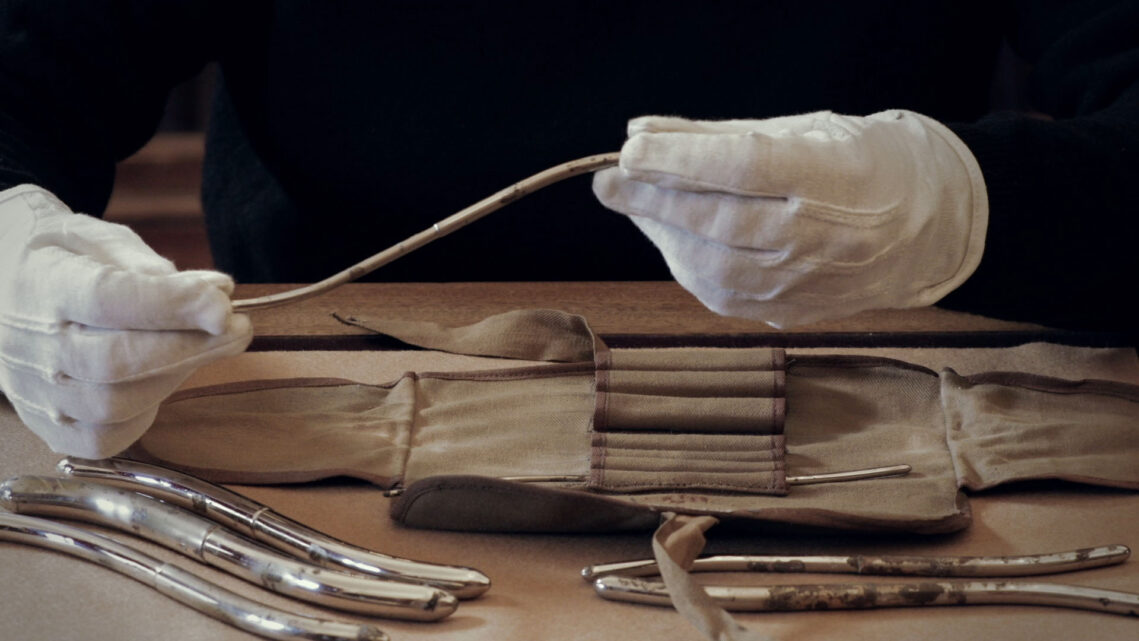
Lyndsay Mann is an artist filmmaker who has been teaching Fine Art at the University of Edinburgh for a decade. Her work bridges art and science and breaks down walls between experts and ordinaries. She engages with specialists whose knowledge, based on studies and research, is often considered objective. Talks with these experts reveal personal experiences that challenge the authority of their formal education. In her latest film, As You Were, Lyndsay speaks with NHS maternity specialists about their own experiences of giving birth. Instead of showing actual births, she uses metaphors such as a women’s rowing team and shows archival footage from the Royal College of Surgeons. Ultimately, the film is about experts becoming their own patients. Surge talks to Lyndsay about the inspiration of Edinburgh as a city, the NHS and breaking the hierarchy of higher studies.
Besides the NHS being the British health system, why is it important to show the film in Edinburgh?
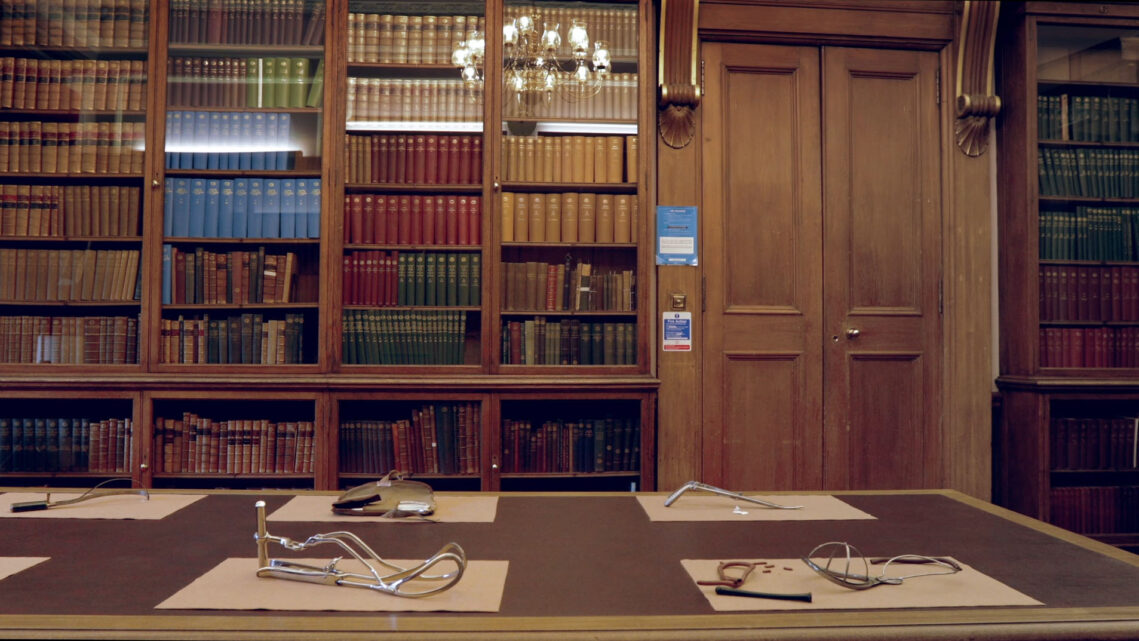
As You Were was made here while I was a lecturer in Fine Arts at the University of Edinburgh. Maybe half of the women whose voices you hear in the film were working in Edinburgh at the time, and all of them had a Scottish connection. The rowing team is the second women’s team of the University of Edinburgh, and the support network “NHS Lothian” is based in Edinburgh, too. The funding came from Creative Scotland. The Surgeons Hall Museum supported the project by giving me access to archive material of the Royal College of Surgeons of Edinburgh. There were just so many generous people that were really supportive of the idea and the project. So it feels very exciting that it’s showing in Edinburgh.
Is it easier to realise such a big project in a well-connected city like Edinburgh?
Edinburgh is connected and supportive, but mostly a lot of openness is what I experienced.

What makes the shift between the objective knowledge of medics and their personal experiences so important?
This specialism is being led in a hierarchical sense by people that have studied and read books written by people that haven’t experienced any of it, too. Their education comes from an objective view of the body. This knowledge doesn’t really take account of how people actually experience well-being, illness or pain, although we’re increasingly understanding how the impact of our perceptions informs the way our body reacts. Objective positioning of patient experience doesn’t acknowledge the complexity of people’s wellbeing. I want to look at where these parameters meet each other between the personal and the professional. As You Were is a way of thinking about how we might reframe the body and the knowledge about the body.
For As You Were, you interviewed NHS maternity specialists that had given birth.
Yes. In medicine there is this idea of the need to keep a distance when you’re working with a patient. There’s a certain amount of objectivity needed to be able to do your job, to think clearly, and to not get kind of sucked into emergency situations. I wanted to talk to them about how it feels to work within an institution that has a set of guidelines and a certain set of practices that have to be put in place for everything to keep functioning. But these doctors and nurses can experience what they’re treating. What does it mean when you have direct bodily experience and a so-called “transformative experience”? It shifts the way in which you see the world, how you perceive the discipline you’re working in, and the care and practice that you offer to the patients that you work with.
Do you think that being able to gain such a transformative experience makes women better suited as obstetricians and midwives?
I don’t think so; situating gender in that way isn’t helpful in this conversation. There were conversations in the film with an obstetrician who has a very clear idea of how they want their birth to happen. It starts to not go the way they want it to happen, but they manage to control the situation through their experience of working in the field and have the birth that they wanted. Those specialists can then come back into practice and perhaps have less empathy with someone in a similar experience, with the implication being “well, I managed this”.
The Scottish Human Rights Commission reported a lack of a realisation of human rights in the Highlands and Islands in November, where some woman in rural areas, gave birth en route to hospital, had to consider C-sections or avoided pregnancy altogether after experiencing their first birth. Do you think this film should also be shown in rural areas to raise awareness?
Yes. The film was shown at the Sea Change Film Festival last September and will be screened in community cinema spaces around Argyll & the Isles as part of this year’s festival. I was delighted about that because the cinema spaces are often community run. It’s groups of people who have a passion for film and who work together to screen smaller films or documentary films. It’s such an amazing audience. These are people who are galvanised and motivated to engage. With the report in mind, the screening of this particular film in front of this specific audience gains even greater value.
One of the scenes shows a women’s team rowing. How does that metaphor work?
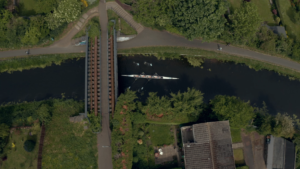
In maternal health care after the birth of my daughter, it was all women I saw. As an artist, I wanted to abstract this personal experience. Growing up and living in Edinburgh near the Union Canal, I’m used to seeing many rowers. Actually, rowing very much reminds me of being literally in the birthing room. The breathing, the being out of breath, the movements, and the cox at the front telling the women where to put their arms and where to put their legs. You need to know how to use your breath to move something forward and to create a shift, create momentum. Besides the rowing, the Union Canal also made me think about the birth canal. I really like these little funny things. I didn’t want this film to show a baby or a birth. So I had this idea in mind of an aerial drone shot of women working together, breathing, moving their bodies and traversing a canal.
The sound of water became a sonogram
The team is not isolated but floating on water. How do the water and stream come into that picture?


I wanted the sound of floating water. Our sound designer, Tom Drew, and our sound recorder, Pete Smith, took the water sounds and the rowing. They mic’d up the inside of the boat and each of the individual oars. The disturbance of the sound that water and breathing make together almost became a sonogram. As if you could hear the heartbeat and hear the signs from inside your belly. I was really pleased with that.
Have previous screenings already triggered a discussion in line with your expectations?
From having shown the film so far, one of the most striking things is people really want to talk about their experiences. Reproductive healthcare and reproductive experiences are such a huge part of the population and life. But they’re not really discussed. Pregnancy and birth, I think, are still kind of considered a niche topic. Which I find obviously quite odd considering everyone has been born. The idea that it’s a niche is curious. I’m happy there’s discussion now.
As You Were will be screened on the International Day of the Midwife (5th May) at Edinburgh’s Royal Infirmary Hospital and St John’s Maternity Hospital and as part of the Sea Change Film Festival 2025 in community cinema spaces around Argyll & the Isles (details tba).