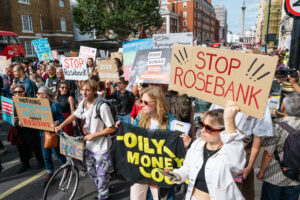
Living in a time of worldwide upheaval and protests erupting everywhere, it may be hard to feel like we’re doing much at home. Edinburgh isn’t widely known for mass mobilisation, nor its activists.
Nevertheless, the city was home to a High Court decision that propelled an environmental movement to the forefront of international climate activism.
In light of the UK government’s recent unveiling of proposals to ease the tax burden on the offshore oil and gas sector, thereby banning new drilling licenses, the debate regarding the future of the North Sea’s energy production has intensified.
In 2023, the then-Conservative government approved the Norwegian oil giant, Equinor, to start developing the Rosebank oil field, 80 miles off the Shetland coast in the North Atlantic. The Stop Rosebank campaign was formed shortly thereafter to stop the new drilling operations.
Juliet Dunstone, a spokesperson for the campaign, says Scottish activism can often feel limited compared to huge protests in London or Bristol, but local activists shouldn’t shy away from organising for that reason.
“Actually, seeing all of the little pockets of resistance that are happening from smaller grassroots groups is also equally important,” Juliet says.
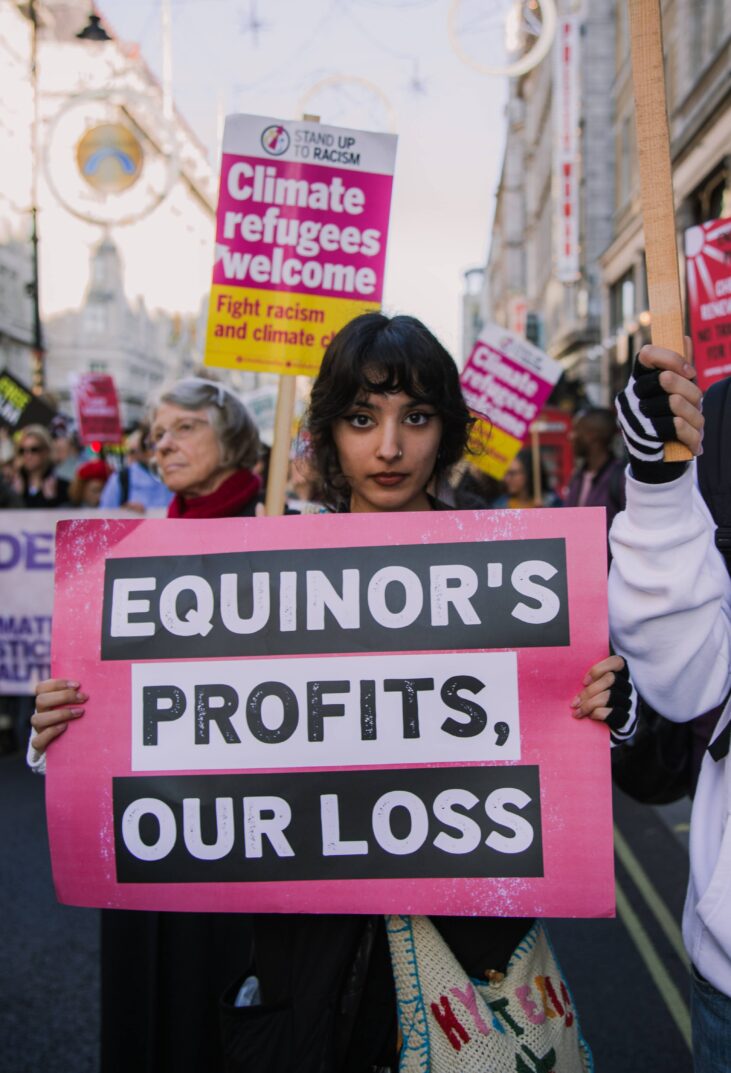
While there is a lot of grassroots activism happening in Scotland and in Edinburgh, she recognises it can still feel hard to get enough people to make a protest feel real.
However, Juliet has found real power in community organising here that’s changed her life and, for the moment, the North Sea’s fate.
“I’ve realised how powerful [grassroots movements] can be, especially if they’re really persistent,” Juliet says.
In 2022, she’d been working on her postdoc for almost two and a half years. Juliet was doing theoretical research in psychology, but she couldn’t do it anymore.
“I was just burning myself out because the thing that I felt mattered to the world was the climate,” she says. “The thing that I had to do in my day-to-day life was this work that nobody cared about apart from just other academics.”
She felt her work wasn’t helping people when the climate was calling to her.
“So at the end of 2022, I just, like, lost it to a certain extent,” she recalls thinking she hated her job. “I obviously just had really bad climate anxiety.”
Ailing her fears of climate change, she joined a meeting in Edinburgh called “How to Stop an Oil Field”. Marking the introduction of the Stop Rosebank campaign, the meetings sparked action for what Juliet didn’t know was to become a watershed environmental case.
Her newly found free time led her to join more and more meetings, demonstrations and actions until she gave a speech that landed her on the campaign’s media relations team.
Juliet had entered the campaign with a renewed passion, but the Stop Rosebank campaign was facing what “felt like goalposts changing all the time”. The volatility of the then government was proving a serious hurdle in trying to stop the inevitable approval of the licences.
It almost came with a shock
As a result of the amount of campaigning activists had done, Equinor’s accession to Rosebank and the estimated 500 million barrels of oil it holds came with a huge public outcry.
Rosebank was headline news, and the campaign was suddenly in the public eye. Juliet was even invited to appear on that evening’s BBC news bulletin.
“It was encouraging to know that we had had an impact and that people were taking seriously the fact that we were campaigning against it,” Dunstone says.
Alongside Greenpeace and UpliftUK, the Stop Rosebank Campaign mounted a court case to appeal the approval of the licenses, which had omitted the extensive environmental impacts new drilling would cause down the line.

Juliet says it was after the approval of the licences that their campaign built momentum to garner support for their court case in Scotland.
“This is a Scottish issue, and it did feel like there was suddenly more momentum because we had this really big goal to fight against,” Juliet says.
On the day of the court case itself, hundreds joined campaigners before the High Courts to echo the sentiments of the almost 100 thousand people who had joined the appeal.
It was a massive win: the campaign successfully stopped Equinor, the Norwegian oil giant, from beginning new drilling operations in the North Sea’s largest remaining oil and gas field.
While the Stop Rosebank campaign fight against the oil corporations in the North Sea is far from over, the win is an energiser for the activists.
“Having that positive history of being able to say we did stop Cambo (2021), we did stop Rosebank, we are a force to be reckoned with,” Juliet says. “I think it will just make people feel good and confident from the campaigning end that we can, and we will, stop more development.”
She recognises more could happen in Edinburgh in terms of grassroots, but also acknowledges there are so many people engaged; it’s more about getting them involved.
Whether it’s an environmental issue, a gender issue, a refugee issue, a war issue, or a housing issue, Juliet says there are so many groups that are organising for so many things that it is impossible for people not to find community.
You’re not going to be by yourself
Juliet advises that picking what you care about the most leads to the most impact, especially in a world where a glance at your phone can fill you with anxiety for the world’s future.