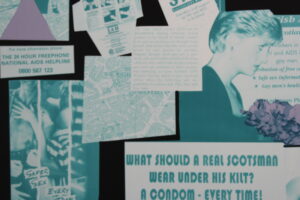
Ours is a city where queerness exists in every corner, a vibrant and indispensable part of Edinburgh’s identity.
Desire Paths, an exhibition exploring Edinburgh’s history through a queer lens, aims to bring together the current queer networks in Edinburgh through literature, art, and places.
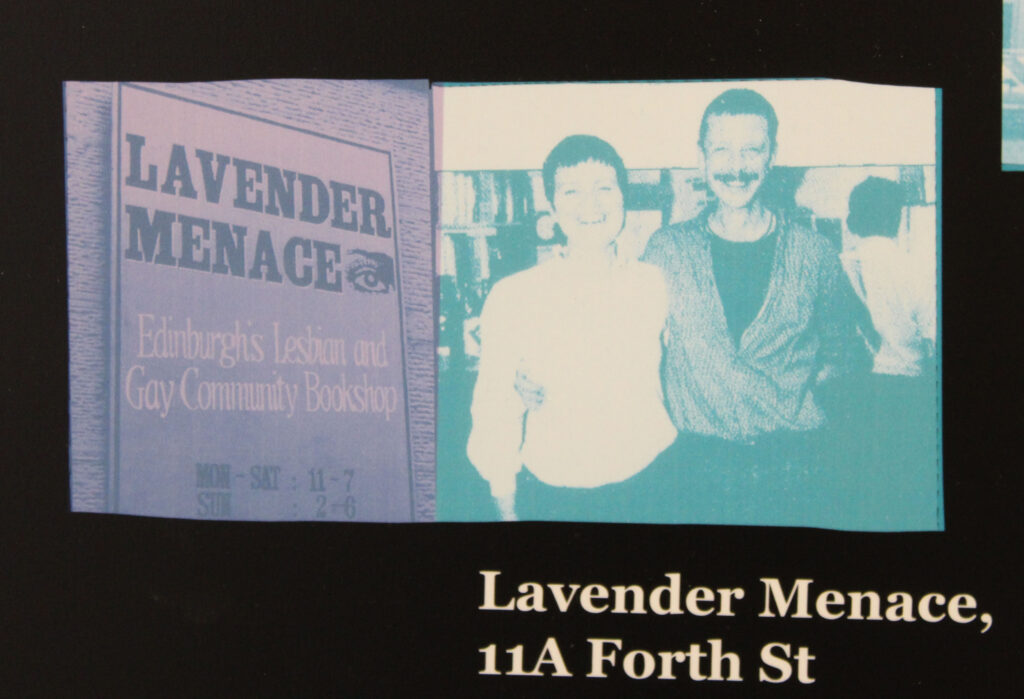
Lavender Menace curated the project. The first Lavender Menace bookshop in Edinburgh gave queer people solidarity in the face of threatening social and political constructs, when it opened in 1982. Sigrid Nielsen, a founding member, shares how queerness in the early 80s felt far more isolating than it does today.
Sigrid recalls the struggles she faced opening up the first LGBTQ+ bookshop in Edinburgh: “We experienced a lot of vandalism around the time of opening our first shop on Dundas Street in the 80s.”
“But finding the big bubble of the Edinburgh gay network gave me a world to move around in freely,” Sigrid explains that nowadays, those bubbles of queerness expand into multiple networks around the city, the main difference being that they rarely interact.
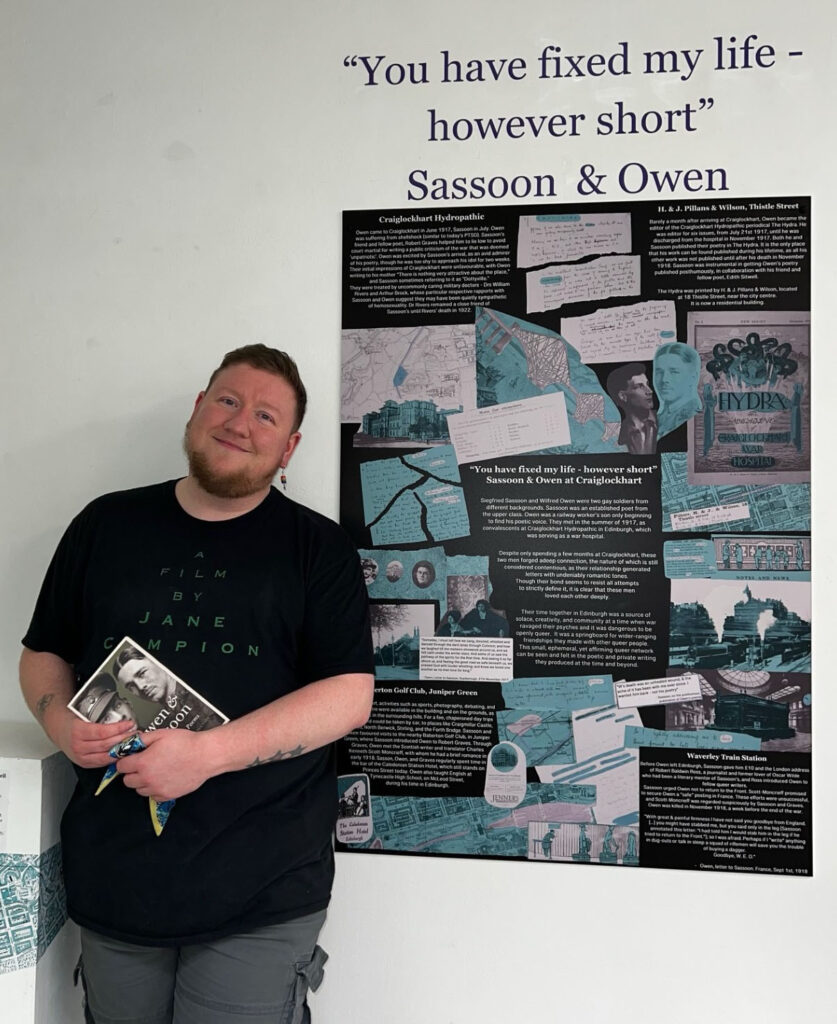
One of the standouts of the exhibition is a feature designed by Ash Alexander, a trans literary academic. He spent months researching the relationship between Wilfred Owen and Siegfried Sassoon, two of Scotland’s best-known war poets.
Ash explains, “Being part of this exhibition has completely changed the way I see Edinburgh.”
“Just walking down Princes Street and knowing that Waterstones was once home to the most iconic gay nightclub in Scotland reminds me of all the queer joy of the past,” Ash says.
Ash’s archival research for the exhibition took him on a deeply emotional journey.
“As a trans person who now lives in a time when old arguments about transgender lives are resurfacing and hurting our community, I see our exhibition as countering queer and trans people’s pain.”

For Lavender Menace, trying to deny queer existence is to erase past, present and future voices from being heard. Desire Paths exhibition is their way of getting queer voices of the past out there.
Ash beams, “We’ve documented how fights for our rights have been fought in the past, and in doing that, I think we’ve managed to give others hope that we can get through this again.”
The exhibition also highlights the power of sharing queer experiences. Printed on the main wall is a map of Edinburgh on which the public are encouraged to mark their personal queer experiences.

“What you see in our exhibition now is how queer people, as far back as 200 years ago, have been forging their own unwritten paths,” Ash explains. “No one gave these individuals the permission to live the way they did. People wanted them to stop. But like a desire path, they just kept on emerging, following their hearts.”
At Desire Paths, everyone can physically see and feel the overlap in queerness on the map. The warmth of queer joy fills the space; you can’t help but feel wrapped up in ardour.
Here lies the evidence of Edinburgh’s unyielding queer joy. Each artefact of queer identity displayed at Desire Paths tells a story of resilience and hope.