As the UK gears up for another visit of Donald Trump, it calls into question at what price we are willing to give up our values.
The King has invited the sitting U.S. President to Scotland for a historic second state visit. Should we be doing this at all given the incumbent’s thirst for norm-breaking?
The man who orchestrated a coup attempt to try and stay in power should not be rewarded with an invitation to our shores.
A second state visit is extremely rare, having only occurred twice since 1952, with presidents George W. Bush and Barack Obama being accorded the honour. Should we really be deploying the full diplomatic roll-out for such a polarising figure?
Here in Scotland, our Enlightenment history weighs heavy. It calls into question the clash between our historic values of rational thought and openness when pitted against the seemingly antithetical values of the current occupier of the White House.
Politically speaking, we are a nation and a city far from perfection. The hurried stand-down of former First Minister Nicola Sturgeon and the resignation of Edinburgh City Council Leader Cammy Day, over alleged inappropriate messages, are but a few political scandals that have plagued the capital. However, we resolve such issues amicably in the democratic tradition that Enlightenment figures such as Hume would recognise as both rational and civilised.
According to a poll prior to the November election, people in Scotland were Donald Trump’s biggest supporters in Western Europe. Trump owns the Menie Estate golf course near Aberdeen and the Trump Turnberry Hotel and Resort in Girvan. YouGov figures found that 21% of people surveyed in Scotland were in favour of him winning the election. Another such poll by Norstat found a quarter of Scots backed Trump.
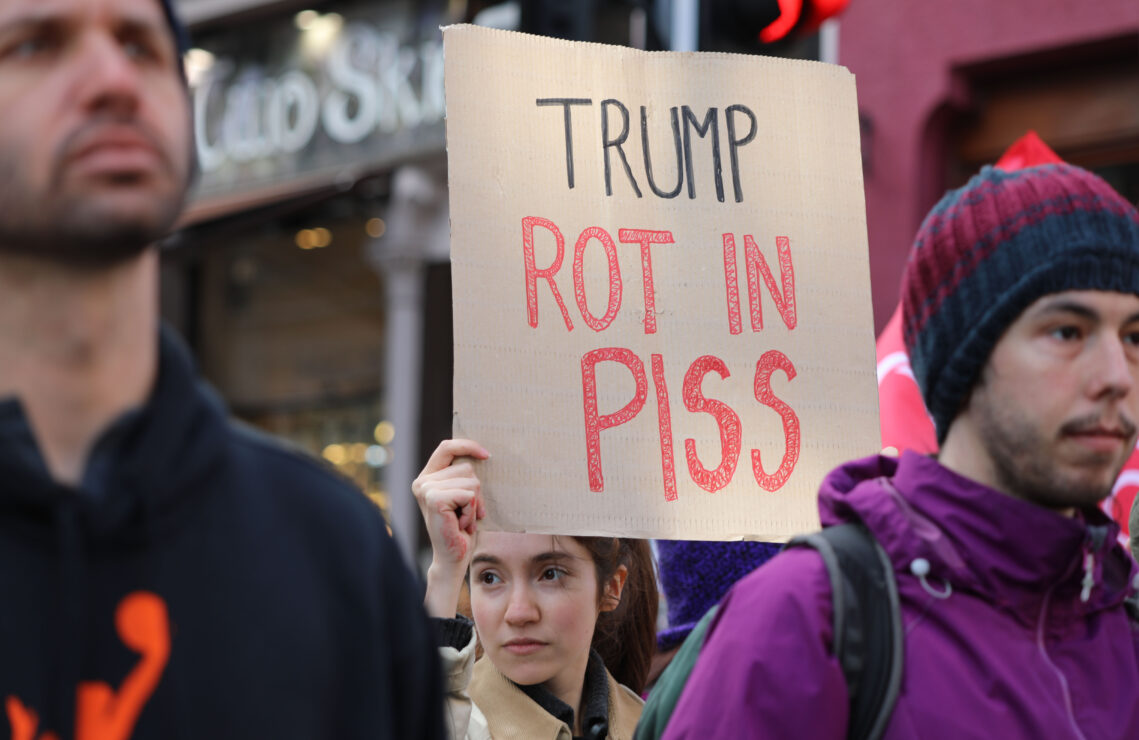
However, a February poll showed that more than 70% of Scots now have an unfavourable view of Trump – but young people are more likely to support him. The survey by Ipsos Scotland found 71% of the respondents held an unfavourable view of the American leader.
What does it say about us if we do not take a stand for our values but instead compromise to appease a leader that does not reflect who we are? We would not do the same for the leaders of China, Russia or Hungary.
We have a significant and some may say ‘special’ relationship with the United States, but it seems that Prime Minister Keir Starmer is using the trappings of British prestige in order to appease and charm Mr Trump.
The problem is that our special relationship worked because it was always based on shared values and interests. This is now in question.
Is this relationship worth anything if our stances on democracy, the war in Ukraine, economic openness and free trade, or the importance of institutions such as NATO are fundamentally at odds?
Perhaps the smart thing politically is to charm a leader susceptible to flattery. Perhaps the use of the most prestigious facets of age-old British diplomacy will help appease a populist that harbours a fascist-style modus operandi. The real question is what is the cost of the special relationship now and might the price be our values?