Standing on the doorstep of someone’s home, finger hovering over the doorbell, leaflet in hand, waiting to hassle them with questions over their voting intentions is admittedly a novel experience. Those few seconds between the faint ‘buzz’ and hearing the footsteps reluctantly trudging to the front door are often longer than the exchange themselves. The feeling of intrusion and intimidation is overwhelming, yet for those involved in the microcosm of party politics, knocking on somebody’s door is both a necessity and a gratifying experience.
It occurred to me throughout the run up to this election, that despite being registered to vote, I have never been doorknocked. The most analogue form of campaigning out there. I was not an anomaly. I spoke to my friends, all students or recent graduates and all registered to vote and they said the exact same thing.
A couple of years ago I interviewed a Labour campaigner for another project, and what struck me during our conversation was the dismissal of canvassing students or young people’s flats. In his words: “It’s a waste of time and breath, it’s not like they will answer”.
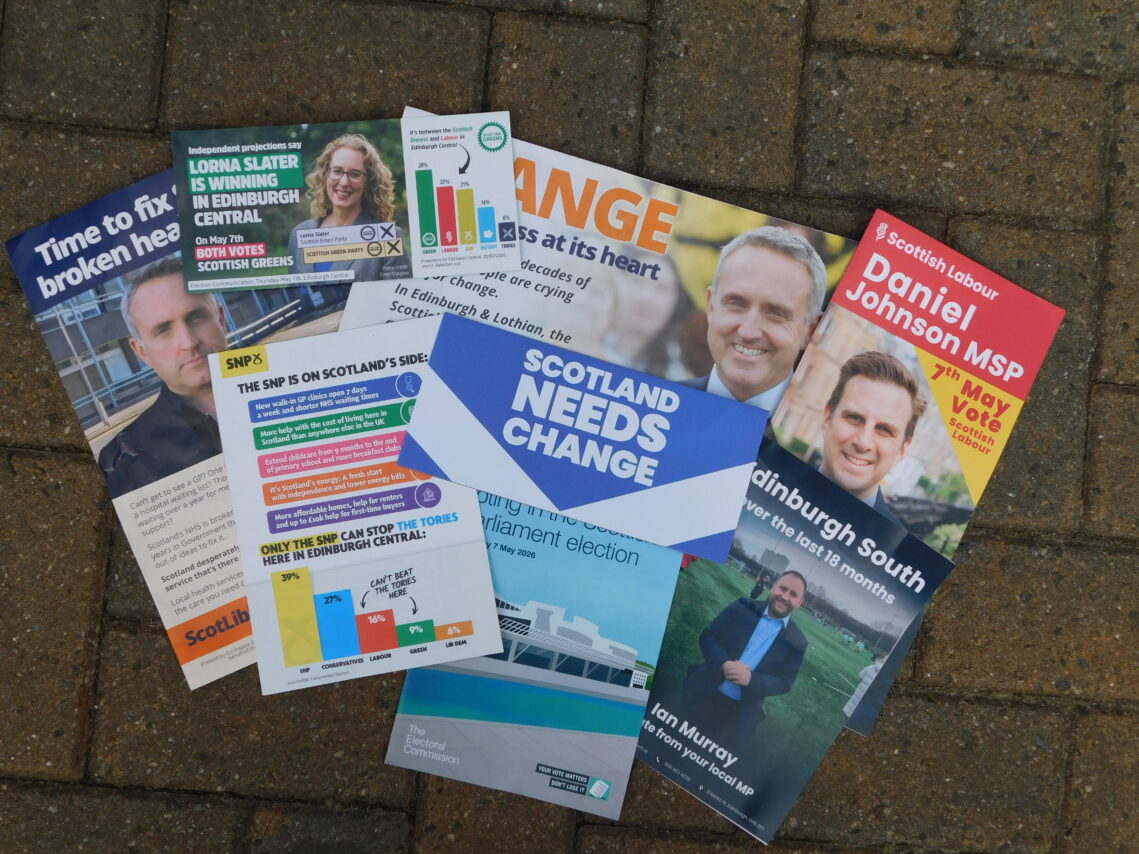
I wanted to observe real political campaigning in action, so, on a crisp Saturday morning in February, I joined a doorknocking session in Musselburgh. In the suburbs of Edinburgh, far from the usual urban bustle, the mood was not one of enthusiasm but rather one of duty. The demographic of volunteers was largely formed of older, white men with the odd young volunteer coming from the Labour Society at The University of Edinburgh. Huddled in a group of about 12 people, the Labour’s Scottish Parliamentary candidate for the area Katherine Sangster (‘Kath’ to most of the volunteers) quickly briefed the clearly experienced team on what to do. “Be respectful, if they don’t answer make sure you post this leaflet through the letterbox so they know we tried to speak to them. If they do answer, hand them this other leaflet so they know what we’re about”. Clearly the usual spiel for Kath.
There was an overwhelming number of ‘no’ answers and a few reticent interactions, which was to be expected. But despite this, one interaction started with an older lady opening the door. Greeted by volunteer Jess and candidate Kath the usual script commenced.
After being asked, “Are there any concerns you have?” I was shocked to hear that the irregularity of the number 30 bus was her main priority. Her reasoning? Struggling to get into the city to meet her daughter and grandchildren, or to even do her weekly food shop. Not only was she let down and frustrated, she felt increasingly disconnected and exasperated. With countless sympathetic nods from Kath and Jess to her heartfelt monologue, a few agreeing ‘uh huhs’, and multiple reassurances, I could sense that the lady at the door felt relieved – she had actually been listened to.
“When you grow up in a political landscape that has embraced social media, there is such a disconnect to the mundanity of the democratic process.”
The interaction lasted over 10 minutes, a stark contrast to the typical 20 second conversation at the door. After asking Jess about the rarity of these longer exchanges, she said “Coming out and actually speaking to people helps you realise what’s important to them”. Something similar occurred with another woman, this time slightly younger. A long discussion occurred about the closure of the local theatre, and how disappointing this is for the community, in particular her daughter’s dance school who use the space for their yearly performances. Again, an underlying loss of community was the most pertinent issue that was raised at the door. But perhaps most importantly, it was not akin to a screaming match, as all interaction seems to occur online.
“Social media and politics can be an isolating black hole, fuelled by echo chambers and factionalism.”
If you have spent any time on social media in the political sphere, it may be no surprise to you that young people are increasingly becoming more polarised. The statistics from the previous UK election compound this: despite the relatively low turnout of under 24s, support was most concentrated in the Greens and Reform. Where social media encourages the need for opinion, a black and white opinion at that, it is surely a reflection of generational societal norms that the two parties most successful in appealing to the younger electorate were both at opposite ends of the political spectrum.
Spending time in any form of political social media echo chamber conditioned me into believing that most people’s priorities will and should be something replicable to a Shakespearean drama. After all, politics is local, but when you grow up in a political landscape that has embraced social media, there is such a disconnect to the mundanity of the democratic process. I feel this is reflected among a lot of people my age. It feels that we have lost a sense of real community. All we know of politics is overexposure: it is an anonymous account spurring out right wing nonsense, deepfakes of the Prime Minister, or, in my case, arguments over a minute detail in the composition of the 1922 committee. It’s not necessarily the state of Lothian buses.
Social media and politics can be an isolating black hole, fuelled by echo chambers and factionalism. As someone who was very misguidedly active in the online political world from 2019, it has taken many years of self reflection to detach myself from this. I did not tend to post, but rather interacted with Labour accounts, and I became a somewhat expert on the inner workings of the Labour Party. I genuinely think I could name most Labour MPs (obviously made a lot easier by the scarcity of them at the time). I knew about all the different (and many) factions of affiliated groups, could name most people on the NEC, the list goes on…
Only since taking a step back did I realise how utterly exhausting this was. I understand that I am an anomaly, for most people politics is an annoyance, not something to be observed with great fascination, but when you spend so much time doomscrolling online, it feels hard to accept that.
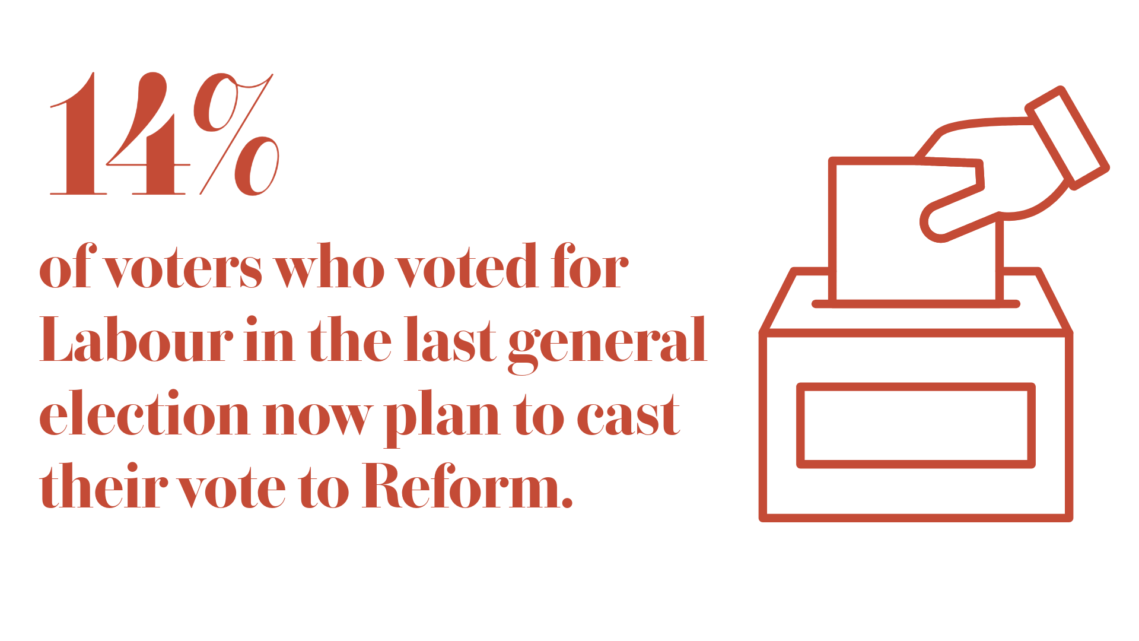
This is not me trying to argue that polarisation is not alarmingly increasing. A recent YouGov poll has suggested that the SNP are still in the lead, with none other than Reform placing second in both the constituency and regional list votes.
Contrary to much of what is normalised online, politics has always been about people and connection. Social media has undoubtedly helped to mobilise movements, build momentum, and been used in politics for good. But, only when you interact with people on the doorstep do you realise what is most important to them, an account on X will seldom offer you that privilege.