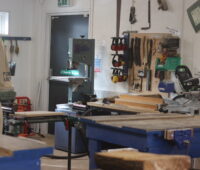
The door nudged open. Peering in, the sawdust swelled with the odour of emulsion, and the air hung still, like a freshly built house. The room to my right hummed with the buzz of steady handiwork.
The Men of Leith Men’s Shed isn’t your traditional mental health charity. Its first order of business is to give purpose.
“Hello!” cheered a voice from inside the workshop. “My name’s Eain; let me show you around.”
We entered the kitchenette in the main room. Behind a board: ‘Things to do’. Items including, but not limited to, building tables, finger holders, and fixing bed feet. The air buzzed with the distant vibration of the circular saw they were using next door.
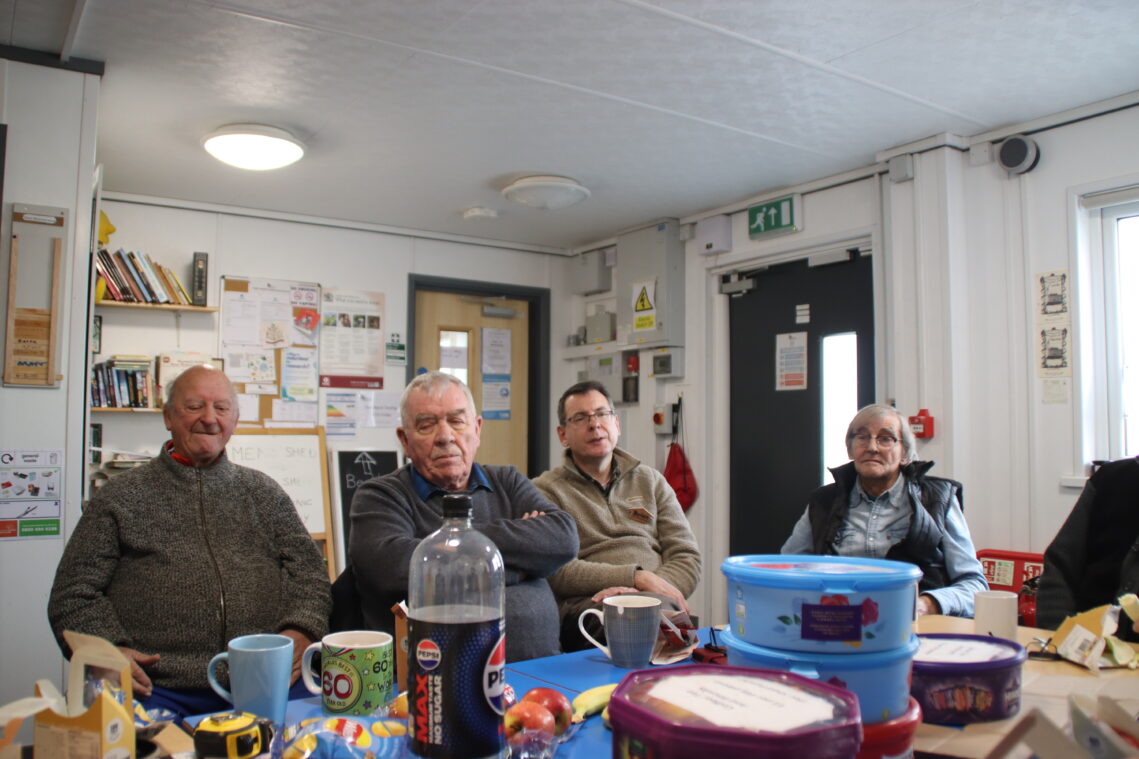
No words of affirmation, no empty tomes on display for a more sentimental audience. Everything in here serves one facet of human interaction: function. Once you know what you’re doing, problems seem a little bit easier to solve. Anxieties begin to dissipate.
Eain went into the electrical workshop. They had inkjet printers, hoovers, CRT televisions and the like. This was where items are fixed for a fee – materials only. If you have anything extra, you can donate. Everything had a place, from the high-hung shelves of meticulously organised screw sizings to the spare circuitry in the drawers below.
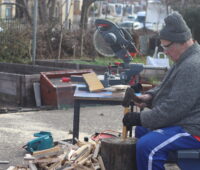
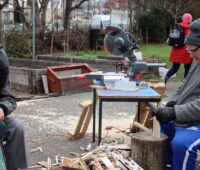
The buzz continued in the workshop. Dougie and Ken were building a pedestal to hold a donation display and card machine for the Playhouse. Ken’s been here a week, and Dougie, at 75, has been here five years. Dougie said they have a contract with Swatch, the watch company. “If anybody needs repairs, they tell them to come to us.”
His smile was one of pride. Dougie was useful. People relied upon him to get things done. Despite his age, he is still so full of youth, and the Men’s Shed has given him a place to thrive.
This feeling can lift any man. According to a study published in the Journal of Consulting and Clinical Psychology, the most common words used in suicide notes are ‘worthless’, ‘useless’, and ‘burdensome’.
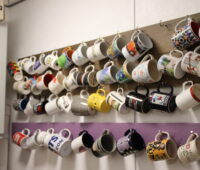
For lunch, Eain brought in sandwiches, and more folk seemed to trot in. Within moments, they were holding court, discussing the robustness of Dougie’s garden set he built from composite wood and how good the world-champion marmalade maker and his produce were. He was a Men’s Shed alumni.
“One of our old members, who’s passed now, built his own coffin to be buried in!” Eain told me. A jovial reminiscence passed over the men, almost in unison. It was clear they had held him in high regard.




The ruckus continued, and topics flipped and flopped like a jukebox. The variety of viewpoints clashed like waves against rocky beaches. There seemed to be a focus on how much the world had changed. They talked of the SNP, who killed Diana, and what their opinion was of the Sussexes. A small quip here and there lightened the mood.
“Back in the day, you wouldn’t get caught pushing a pram as a man,” said Ken. “It was something you just didn’t do,” said Ken.
Subsequent comments alluded to the starkness of the change that they had experienced; one commented on how the world is unrecognisable. The conversation went on to Trump and his foreign policy. The room was split.
Three of the men took to understanding Trump through realpolitik and the laws of power and strength; others lamented him for it. There was no feeling of hostility or incivility. Just men, with an excuse to get together and build, make, connect. Letting men be happy, instead of labouring over their melancholy.
The Men’s Shed project may be unashamedly masculine, but for these men it’s understated, functional, useful, and safe.