
In a crowded wine bar in Edinburgh, I watch a young woman tear a sheet of paper from her notebook, scribble down her number and carry it across the romantic room. No online nonsense. Just a phone number pressed into a stranger’s hand. This is how dates would come to be before technology became a helping hand, but as I watched her, the encounter felt foreign.
Ever since the growth of social media, the way young people date has drastically changed from meeting in person to connecting through the online world.

Dating apps have caused our generation to make decisions based on a few sentences and pictures, and with a simple swipe. The potential of love may be gone forever. What I soon discovered is that the man who received the number was gay, and whilst he felt flattered, he obviously would not be interested in pursuing anything. One thing that modern dating allows is knowing people’s interests, sexuality, and personal traits, etc., before meeting. Had she been online, she would never have met him.
However, with a recent surge in digital fatigue and awareness of the impact that technology is having on our lives, we are reverting to an organic approach. Younger people are finding dating apps tiresome and are beginning to ditch the matches with a longing for something more worthwhile.

Edinburgh’s vibrant and welcoming social scene is constantly evolving, and the unfamiliarity of in-person encounters is beginning to change. With a wave of in person dating options, there is a new focus on real life meet-ups.
Events and organisations such as speed dating, lookalike contests, and fundraisers are bringing dating back to life within communities. Most notably, Thursday Dating has provided in person meet ups and experiences based on the belief that doing things the ‘old-fashioned way’ will bring people together. For example, they throw events like dinner parties, bingo, cocktail making, arts, crafts, and sport activities in major cities to encourage people to move away from endless swiping.
“It was so easy going to use the apps but it became automatic whenever I went onto my phone, on the bus, at lunch, anytime, but I wasn’t actually getting to know anyone.”
The dilemma between online vs in person dating led me to attend an event in Edinburgh’s city centre, and upon arriving as a single 22-year-old, I will not lie it felt bizarre. It was pouring rain, not the romantic atmosphere ‘the movies’ make out to be, and the whole concept of not knowing what or who to expect made me feel incredibly anxious. It was refreshing not having studied anyone’s socials or already knowing their hobbies and job status.
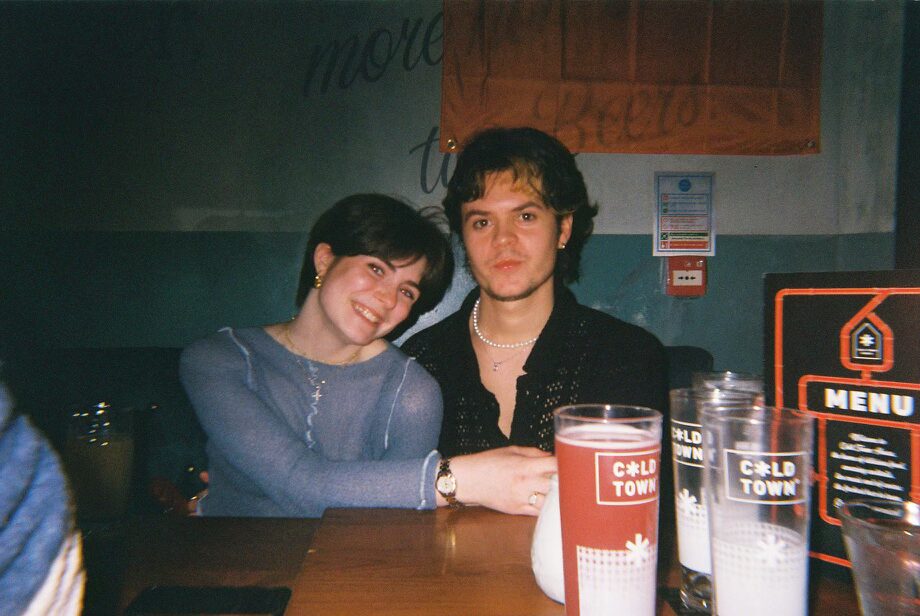
It was held in a popular bar, and the place was crowded from wall to wall with people. I was surprised at how many were chatting and clearly at ease – considering how far gone society has gotten into online communication. There was no element of discomfort. As I made my way through the room, there was a lot of laughter and drinking, but also a lot of engagement. People were really trying. I attempted to read body language and gauge conversations, but the main thing I sensed was excitement, an element of reinvigoration.
Sasha, the host of the night who works for Thursday Dating, told me: “60% of people come alone; they are fed up with dating apps.” I asked her what she witnessed during her experience working for the company, and she replied by providing stories and examples, including how a woman got in touch to let her know she is marrying the person she met at one of Thursday’s events. She said: “It really does work. People are not fussed with only using apps now.”
“A resurgence of organic romance is happening.”
Sasha evaluates the statistics of people taking interest and can see consistent rises in people attending, sometimes more than a hundred at one event.
I was later approached by Samuel. He was a little older than me, and quite casually struck up a conversation, relying on the line that we both came alone. He said he and his friend both agreed to lay the dating apps to rest because they clearly were not working: “It was so easy going to use the apps but it became automatic whenever I went onto my phone, on the bus, at lunch, anytime, but I wasn’t actually getting to know anyone.”
Another dater, Georgie, said it was her first time doing anything like this in person, and whilst it was intimidating and online dating can provide protection, she said: “It’s much easier to actually be human and talk to people in person than we think.”
“What happens when someone is terrible at communicating online?”
Sasha explained that people are realising how online dating acts as a barrier; for example, when you meet someone in person, you do not say hi and then have the chance to swipe away. I realised how more intimate formats allow us to truly get to know someone, their mannerisms and their appearance and gain deeper insights into their personality.
To older generations, this may seem ludicrous that events need to be set up for people to meet in person. For me and you, imagining a life where people knew nothing else other than face-to-face encounters without a ‘talking stage’ online is what seems ludicrous. Nonetheless, what happens when someone is terrible at communicating online, or if their dating bios do not portray their personality?
There is only so much a person can do to connect online whilst also being transparent. A resurgence of organic romance is happening. Maybe we are just bored of online dating or want more intentional experiences in a playful-led atmosphere. This could be connected to our generation’s acceptance of people, queer culture and identity, where we feel safe to move away from online spaces.


